Skip to content
Home/IOC/WBSC Sustainability Study

Featured by and built with

International Olympic Committee (IOC)
World Baseball Softball Confederation (WBSC)
IOC IF Sustainability Case Study

How WBSC turned awards into an IOC-featured sustainability case

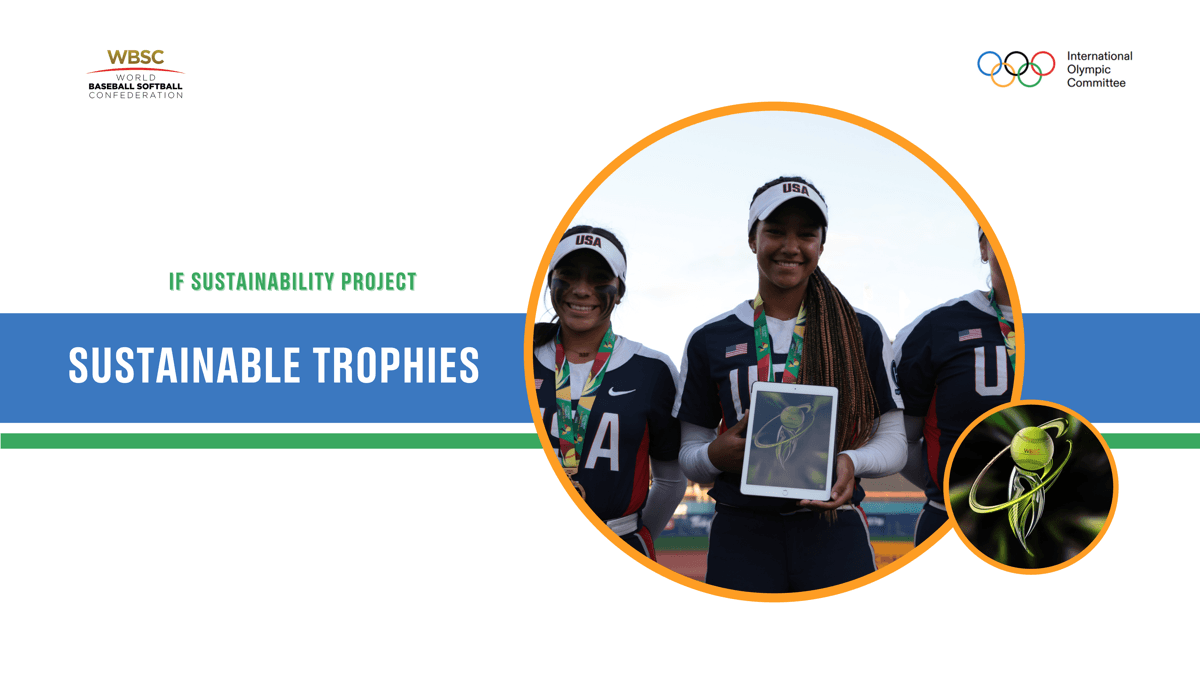
The World Baseball Softball Confederation replaced physical trophies with digital recognition and reduced estimated award emissions from 4,000 t to 0.5 t CO₂e. The result was featured in the IOC IF Sustainability Case Study as a measurable example of how federations can rethink awards.

Before

4,000 t

Estimated total award footprint.

After

0.5 t

CO₂e with digital awards.

Why this case mattered

Awards are often overlooked when sports organisations review their environmental footprint. Physical medals and trophies require materials, production, packaging, and transport.

WBSC worked with Legend to make digital trophies a formal part of championship recognition while removing the physical logistics burden behind traditional awards.

The result aligned with the IOC Sustainability Strategy, Olympic Agenda 2020, and the push for measurable environmental progress in sport.

Reduce the footprint associated with physical medals and trophies.

Offer a more modern form of recognition for younger audiences and future hosts.

Give WBSC a measurable sustainability result it could share publicly.

Keep athlete recognition official while removing the logistics burden of physical production.

Gold medal

708

kg CO₂e per gold medal

Silver / bronze

469

kg CO₂e per silver/bronze medal

Digital award

0.4g

CO₂e per digital award

Typical event

90–100

prizes per event

Source: 2030 Calculator (product carbon footprint). Figures from IOC IF Sustainability Case Study.

“The WBSC is committed to expanding baseball/softball around the world and connecting with new fans worldwide, particularly the younger generation. Our digital project plays a crucial role in achieving this goal.”

Riccardo Fraccari — President, WBSC

Framework alignment

IOC Sustainability StrategyOlympic Agenda 2020UN Sustainable Development GoalsIOC Focus: Sourcing & Resource ManagementIOC Focus: Climate
Get the full study →

Frequently asked questions

Common questions about digital awards and the IOC/WBSC study

What is the IOC/WBSC sustainability study?
The IOC IF Sustainability Case Study featured WBSC's shift from physical trophies to digital awards as a measurable example of how sports federations can reduce the environmental footprint of official recognition. The study documented a reduction in estimated award emissions from 4,000 t to 0.5 t CO₂e.
How much CO₂ do physical sports awards produce?
According to the 2030 Calculator product carbon footprint methodology used in the IOC/WBSC study, a single Olympic-style gold medal produces approximately 708 kg CO₂e, a silver or bronze medal produces approximately 469 kg CO₂e, and a standard medal produces approximately 0.78 kg CO₂e. A digital award produces approximately 0.4 g CO₂e per unit.
What are digital awards in sport?
Digital awards are official trophies, medals, diplomas, and certificates delivered in digital format to athletes after a competition. They replace or complement physical awards, removing the need for materials, production, packaging, and transport. Athletes receive a permanent, verifiable record they can access and share.
Which sports federations use digital awards?
WBSC (World Baseball Softball Confederation) uses digital awards across Baseball5, baseball, softball, and eBaseball championships. Panam Sports and APC delivered 27,000+ digital medals and diplomas across Santiago 2023 and Asuncion 2025. FISU used digital awards at an international multi-sport university Games. A full directory of federations and events using Legend is available at https://museum.belegends.com.
How does Legend's digital award service work?
Legend is a managed service that handles the full digital award lifecycle: award design tailored to each event, athlete data preparation from federation records, issuance and delivery to recipients, and long-term public verification through Legend Museum and Legend Verify. Federations do not need to operate any software themselves.

Get the study

Request the IOC/WBSC sustainability study

PDF document — sent to your inbox

The original case study documents how WBSC reduced award emissions by 99.99%, including the methodology, per-unit carbon footprint data, and the IOC framework alignment.

Per-unit CO₂e figures for Olympic, premium, and standard medals

The 2030 Calculator methodology behind the footprint comparison

How the shift aligned with the IOC Sustainability Strategy and Olympic Agenda 2020

A reference you can share with sustainability or leadership teams

IOC IF Sustainability Case Study — Sustainable Trophies, WBSC

Leave your work email

We will send the study directly — no follow-up calls, no newsletter.

We only use your email to send the requested document or follow-up overview.